Mines Casino Game in Australia: Play, Risk and Access
 Available in AU
Contents
A practical look at Australian access, play modes, bonus maths and what the available evidence can—and cannot—show.
Pokies, Providers and the Cost of Play
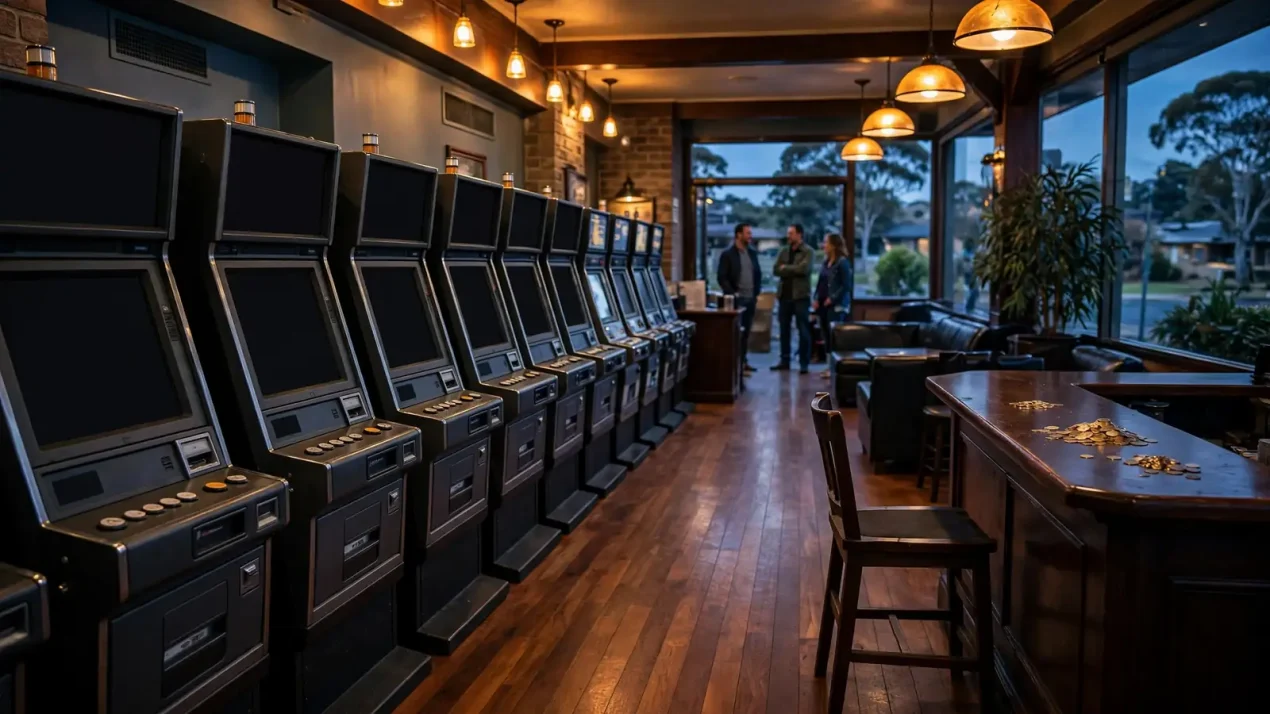
Pokies are a visible part of Australia’s gambling landscape, but the money recorded around them is not a measure of what any individual will receive. A Victorian report cited by gamble.com.au put player losses on poker machines at A$2.6 billion over the year covered, more than A$44.7 million above the figure for 2015. Those are aggregate losses, not a forecast for a particular venue or a typical player. The scale is relevant because it shows how quickly many individual transactions can become a substantial total.
The same reporting put the Epping Plaza Hotel in Melbourne’s north at more than A$21 million generated from 100 machines over the year examined. Venue revenue and player losses are related measures, but they are not interchangeable: one describes money generated at a location, the other a reported loss total across Victoria. Neither figure establishes the result for a particular session. Treating a large venue total as evidence of personal earning potential would confuse turnover with an individual outcome.
Choosing a Mines casino in Australia calls for checking the available operator information before deciding where to play. This reference highlights the specific licensing or payment details provided for each option.
1. Playfina Casino
License: Curacao eGaming (Hollycorn N.V., since 2017) · Min. deposit: A$20-30 (depends on the offer)
Playfina Casino is operated by Hollycorn N.V. and has held a Curacao eGaming license since 2017. The minimum deposit is A$20–30, depending on the offer.
2. MrPacho
Payout speed: crypto 30-120 minutes, fiat 24-72 hours · Min. deposit: A$30
MrPacho lists crypto payouts at 30–120 minutes and fiat payouts at 24–72 hours. Its minimum deposit is A$30.
3. JustCasino
License: Curacao Gaming Control Board
JustCasino is licensed by the Curacao Gaming Control Board.
4. Golden Pokies
License: Curacao
Golden Pokies is listed as operating under a Curacao license.
5. LevelUp Casino
License: Curacao eGaming OGL/2023/174/0082 (Dama N.V.) · Min. deposit: A$15
LevelUp Casino holds Curacao eGaming license OGL/2023/174/0082 through Dama N.V. Its minimum deposit is A$15.
6. SpinsUp
License: Curacao Gaming Control Board OGL/2023/174/0082 (Dama N.V.)
SpinsUp is licensed by the Curacao Gaming Control Board under OGL/2023/174/0082, with Dama N.V. identified as the operator.
7. Rollero Casino
License: Curacao Gaming Control Board OGL/2023/176/0095 (Hollycorn N.V.)
Rollero Casino holds Curacao Gaming Control Board license OGL/2023/176/0095 through Hollycorn N.V.
8. Lucky Dreams
License: Curacao · Min. deposit: A$20 (POLi)
Lucky Dreams is listed with a Curacao license and a A$20 minimum deposit via POLi.
9. DragonSlots Casino
License: Curacao Gaming Authority (Jumpman Gaming Ltd)
DragonSlots Casino is licensed by the Curacao Gaming Authority, with Jumpman Gaming Ltd identified as the operator.
10. Thor Casino
License: Curacao – Antillephone N.V. (Versus Odds B.V.) · Min. deposit: EUR 20
Thor Casino is listed under a Curacao license from Antillephone N.V., with Versus Odds B.V. identified. Its minimum deposit is EUR 20.
Providers publish different games and mathematical settings. One available reference point is KA Gaming, whose slot RTP figures typically fall between 94% and 96%. RTP, or return to player, is a theoretical percentage across a very large volume of game activity; it is not a cash-back rate on an individual stake, nor a guarantee that a session returns any particular amount. A figure at the upper end of a stated range does not remove volatility or make a short run predictable. It is a parameter for comparing published game information, not a household budget.
That distinction matters whenever a game’s presentation makes potential returns look more concrete than the underlying mathematics. A stated RTP describes an average over extensive play, while a person’s result can vary sharply around that average. A provider’s name or a published percentage therefore cannot, by itself, establish that a game is suitable, low-risk or financially favourable. The percentage also does not say how much a person will lose before a return appears. The only defensible financial reading is limited: it describes a long-run theoretical relationship between stakes and returns, not a promise attached to a single play.
Progressive jackpots work differently from a fixed prize structure. Their pools can grow as people play linked machines or a connected network of pokies. A standalone progressive is confined to a local machine-level pool; a networked progressive draws across a wider group, potentially spanning many machines or an operator’s fleet. The broader pool can accumulate contributions from more play, but that fact alone does not determine the chance of winning or the value of a particular stake. “Progressive” describes how the prize pool grows, not a dependable progression in a player’s balance.
Plinko Casino Australia: Games, Rules and Risks
The cost of qualifying for such a prize depends on its rules. A specialist review identifies two terms that need to be read together: the contribution rate and the minimum qualifying bet. The contribution rate indicates how much eligible play feeds the jackpot pool; the minimum bet determines whether a stake counts toward eligibility at all. Some games set a required minimum, with A$1.00 an example. A lower stake might therefore produce ordinary game outcomes without qualifying for the progressive prize. The relevant comparison is not simply the displayed jackpot against the stake, but the qualifying conditions and the amount that actually contributes.
These details also make headline jackpot amounts incomplete measures of value. A large pool does not reveal the qualifying stake, the contribution share, or the frequency with which a prize is awarded. Where those terms are unclear, the headline amount cannot support a meaningful calculation. The amount attached to a jackpot is visible; the conditions governing access to it do the financial work.
The wider arithmetic is uncomplicated, even when the presentation is not: a stake is an expense, a theoretical RTP is not a personal return, and a progressive prize is conditional on its rules. Gambling can cause serious harm, particularly for vulnerable people, and pokies are not an income source. Participation is for adults aged 18 or older. These distinctions keep provider figures and jackpot displays in their proper place: as descriptions of game mechanics, not evidence that the cost of play is recoverable.
Gambling Harm
Gambling can cause serious harm, particularly for vulnerable people, and pokies are not an income source. Participation is for adults aged 18 or older.
Mines Casino in 2026: What the Search Term Does—and Does Not—Establish
“Mines casino” identifies a subject, not a complete set of product details. It can refer to a casino-style game called Mines, but the wording alone does not establish which game is meant, who made it, how it works or whether a particular version is available in Australia in 2026. Those distinctions matter because a familiar title is not, by itself, a reliable identifier of a specific product.
The same limit applies when the words are rearranged: a casino game called Mines, Mines games associated with a casino, or a casino’s Mines offering may sound like equivalent descriptions. They are not proof that each refers to the same game. A name can be used in general discussion, in a product label or in a promotional description. Without a matching, identifiable product and its terms, the label cannot settle which interpretation applies.
A title is not a rule sheet
The word “Mines” does not establish the game’s rules. It does not tell whether play uses a board, how a round begins or ends, what choices are available, or how a result is calculated. Nor does the title confirm that two products described with the same word share a format. Treating a familiar label as a complete explanation would fill the gaps with assumptions.
That distinction is practical, not merely technical. Game rules determine what a stake can produce and what conditions govern a round. A title cannot substitute for those terms. Until the particular product is identified and its rules are stated, claims about its mechanics, outcomes or payout structure remain unconfirmed. No exact configuration can be inferred from the word “Mines” alone.
Casino Dice Games in Australia: Rules and Legal Status
A product name also does not establish its provider. A casino-style label might appear in a description without identifying the company that developed the game or the party responsible for its operation. Provider attribution needs to match the specific title and product, rather than being inferred from a general category or from another game with a similar name. A provider’s wider catalogue, if known, would not by itself prove that it made a particular Mines game.
The year in the label
Adding “2026” places the subject in a time frame; it does not prove that a game received a new release, feature, rule set or update for that year. A dated phrase can be used to describe when information is being sought, while the underlying product may be older, unchanged or not clearly identified. Those possibilities cannot be reduced to a claim of a special 2026 edition.
A current-year reference should therefore be read narrowly. It does not certify that the title is available now, that its terms were checked in 2026, or that a particular provider has published a new version. Each of those claims requires separate evidence tied to the product and date in question. The year in a heading is not a version number.
Nor does the wording establish that every result using the title describes a casino game with the same rules. Similar naming can obscure differences in product identity. A description should be treated as specific only when it connects the game name to identifiable rules and an accountable provider. Otherwise, a claim about one version may be mistakenly applied to another.
A title like "Mines" does not establish the game’s rules, its provider, or its payout structure. Until a specific product is identified, claims about its mechanics remain unconfirmed.
What can be concluded
The defensible conclusion is limited: “Mines” is the name used to describe the subject, and “2026” marks the time frame of interest. Neither term establishes a particular provider, set of rules, payout mechanics or year-specific feature. A more detailed account would need to identify the exact game and support each claim with product-specific information.
This boundary also prevents a common category error: moving from a game label to an assumption of availability. A title does not prove that a service carrying it can lawfully be offered to people in Australia, or that an Australian-facing listing is authorised. The name alone establishes neither. The legal status of online casino services is a separate question from what a game is called.
For the same reason, the phrase “Mines casino game” should not be treated as a verified product specification or as a recommendation. It describes an area of interest, while leaving the central commercial details unsettled. Where the title, provider and rules cannot be matched to a particular product, precision means keeping the description narrow rather than inventing the missing terms.
Online Access and Australia’s Legal Position
A Mines-style casino game sits within the legal category of online casino gambling when it is offered for real money to someone physically in Australia. The relevant distinction is not the game’s name, interface or location of its operator. Australia’s Interactive Gambling Act 2001 restricts operators from providing online casino services to people in the country. Casino-style products such as slots, poker and table games fall within the prohibited-service framework.
That rule concerns the provider’s conduct. It does not make an Australian player criminally liable merely for using an offshore gambling site. The difference matters: a service may be unlawful to provide to people in Australia without the person attempting to access it committing an offence. That does not make the service locally authorised, or turn an offshore licence into permission to offer online casino gambling here.
Crash Casino Games in Australia: Rules and Risks
What an offshore licence does—and does not—mean
An offshore casino may accept Australian payments while operating under a licence issued outside Australia. Payment acceptance is a commercial arrangement, not evidence that the service is permitted under Australian law. Nor does the existence of an overseas licence override the restrictions imposed by the Interactive Gambling Act.
For a Mines game advertised as an online casino product, the legal question is therefore whether the operator is offering prohibited interactive gambling services to people in Australia. A familiar game label or a page accessible from an Australian device does not settle that question in the operator’s favour. The governing framework is based on the service being provided to people in Australia, not on the branding used for an individual game.
This is a provider-side prohibition, not a local approval system for real-money online casinos. Describing an offshore site as licensed abroad cannot be treated as a substitute for Australian authorisation. In this category, an overseas credential and permission to operate in Australia are different things.
ACMA’s role in enforcement
The Australian Communications and Media Authority (ACMA) is the federal regulator that administers enforcement of the Interactive Gambling Act and oversees compliance with federal interactive gambling rules. Its work includes responding to prohibited gambling services offered to Australians.
One enforcement tool is website blocking. ACMA can ask Australian internet service providers to restrict access to websites that provide prohibited interactive gambling services, as well as sites that advertise those services in Australia. The regulator has actively used blocking against offshore gambling sites. A block can make a website unavailable through an Australian internet connection, although it does not alter the underlying legal classification of the service.
Attention: An unblocked page or the acceptance of a payment method does not mean a service is lawful in Australia or approved by ACMA.
Blocking is an enforcement measure directed at access to prohibited services and their advertising. It is not a statement that every site not currently blocked is lawful, nor does an unblocked page amount to approval from ACMA. Enforcement and legal status are related but separate: the Act defines the restriction, while the regulator acts within its powers to monitor and respond to non-compliance.
The distinction also explains why access can vary. A website may load at one point and later become subject to a blocking request. The fact that a page opens, accepts a payment method or displays an offshore licence does not establish that the operator may lawfully offer its casino service to Australians.
Applying the framework to Mines
The label “Mines” does not create a separate legal category. If a site offers a real-money casino game under that name to a person in Australia, the relevant issue remains the provision of an online casino service, rather than whether the game is presented as a standalone product or as part of a wider casino. The same framework applies to other casino-style games offered online.
This legal context does not establish that a particular Mines product is available, approved or operated by a particular provider. It does establish the boundary for real-money casino services: offshore availability and payment acceptance do not make an offer lawful in Australia, and ACMA has powers to pursue compliance, including by requesting website blocks.
Pokie Machines in Australia: Odds, Rules and Play
Casino gambling can cause serious harm, particularly for vulnerable people. Any gambling is for adults aged 18 or over; that age threshold does not change the restriction on operators offering real-money online casino services to people in Australia.
Free Play: No Cash Stake, No Cash Payout Assumption
“Free” changes the financial question, but it does not establish what a particular Mines game offers. A description may refer to a no-cost version, a promotional arrangement, or simply a label. Without clear terms for the specific product, none of those meanings can be assumed. In particular, the wording does not prove that a free Mines mode exists, how it works, or whether it awards anything of value.
The clean distinction is between a cash stake and a cash payout. If no money is staked, there is no cash stake at risk in that activity. That does not make any displayed balance, score or virtual reward withdrawable. A number shown on screen is not a payment condition. Cash value depends on explicit terms, not on the appearance of a game interface or the word “free.”
This matters because free-play language can blur separate arrangements. A game may be presented as entertainment without real-money wagering; a promotion may attach conditions to a reward; or a page may use “free” as a broad description without explaining the mechanism. Those are not interchangeable. A genuine no-stake activity does not, by itself, create a right to cash winnings. A promotional credit, if offered, is also not the same as cash: its terms may restrict use or require wagering before any derived funds can be withdrawn.
Do
- Check for explicit terms regarding cash value
- Verify if a reward is conditional
- Distinguish between a no-stake activity and a cash payout
Don’t
- Assume a displayed balance is withdrawable
- Treat the word “free” as a guarantee of cash winnings
- Assume a simulated balance proves a cash outcome
For Mines specifically, the label alone is not enough to establish a free version or its terms. It cannot confirm whether play is available without payment, whether a balance is only illustrative, or whether any reward can be converted into money. The practical value of a free-play claim is therefore zero until the conditions identify what is provided and what, if anything, can be received in cash. That is a terms question, not a matter of interpreting the game’s name.
Australia’s legal distinction also remains relevant. The Interactive Gambling Act 2001 prohibits operators from providing real-money online casino games to people in Australia. A genuinely no-stake activity is not automatically the same as real-money gambling, but attaching cash prizes, paid entry or other monetary conditions changes the substance that needs to be examined. The word “free” cannot settle that classification. Nor does it turn a prohibited real-money casino service into an authorised one.
7-Reel Slots in Australia: Features and Play
A careful reading separates four points: whether money must be paid to take part; whether a cash prize is available; whether a reward is conditional; and whether the service is being offered as real-money online casino gambling. If the terms leave any of these unclear, the claim has not established a cash outcome. There is no sound basis to treat a displayed win as withdrawable merely because no stake was visible.
The financial risk may be absent where participation truly requires no payment, but that does not remove every concern. Free access can still lead into paid gambling or expose a vulnerable person to gambling-related harm. Problem gambling can cause serious harm, and a no-cost starting point should not be treated as evidence that later spending is harmless. People under eighteen should not gamble; a free label is not a reason to present gambling as suitable for them.
The useful conclusion is narrow: free play and real-money play are different financial arrangements, and neither the word “free” nor a simulated balance proves that cash can be won or withdrawn. For a Mines-branded activity, only specific, clear terms could establish the conditions. Without them, no stake and no cash payout should be assumed.
Pokies Tips and Tricks: What the Odds Really Mean
Demo Searches and the Evidence Gap
A Mines demo is a claim about access to a particular game mode, not proof of how that mode works. The word “demo” may appear in a page title or button, but those labels do not establish the game’s identity, its rules or whether the displayed version is functional. For a Mines-branded game, the useful evidence would connect the mode to an identifiable title and explain what the demonstration actually lets a user do.
A sound description would identify the provider and game version, then show that the interface and stated rules belong to that title. It would also distinguish an interactive demonstration from a static preview, promotional image or generic game description. If the page does not make those details clear, the label alone cannot settle what is being offered.
Consistency matters. The title shown on the page should match the title inside the game; the stated rules should match the displayed interface; and any explanation of the mode should describe its actual limits. A provider name attached to a page is not, by itself, confirmation that the named provider made the game. These are basic checks of attribution and product identity, not evidence that a Mines demo is available.
High-volatility slots in Australia: how payouts work
The term “demo” can also be used loosely. It may describe a playable sample, a preview of screens, or a page intended to explain a game. Those are different things. A screenshot can demonstrate appearance, but it cannot establish that a game can be operated. A description can outline rules, but it cannot confirm that the described version is the one being shown. Where the material does not resolve those differences, the defensible conclusion is limited to what is visible.
The distinction is relevant to Australian searches because online casino-style games, including slots and table games, are prohibited interactive gambling services when supplied to people in Australia. A demo label does not change the legal character of a service that offers prohibited real-money casino play. Nor does the label, on its own, establish that a particular Mines title or mode is available.
Accordingly, a Mines casino demo should be treated as substantiated only to the extent that the page provides identifiable, internally consistent information about the game and the demonstration. Anything beyond that is an assumption, not a feature that can be relied on.
Video Slots in Australia: How Online Spins Work
Bonus Codes: The Wagering Arithmetic Comes First
A promotional code changes the amount or conditions attached to an offer; it does not turn bonus funds into cash. Any bonus-derived balance can remain subject to wagering checks before winnings become withdrawable. For a Mines-related promotion, the code alone would therefore say little about its practical value. The decisive terms are the qualifying deposit, the wagering multiplier, eligible games, contribution rates, expiry conditions and any cap on winnings.
A specialist review gives a worked example: a $100 bonus carrying a 40x wagering requirement calls for $4,000 in qualifying bets before bonus-derived winnings can be withdrawn. That is a calculation tied to that stated offer, not a standard that can be assumed for every promotion. The multiplier may apply to the bonus, the deposit, or both; the wording determines which balance is used. If the base is unclear, the obligation cannot be calculated reliably.
Specialist reviews describe wagering requirements in a range of 30x to 50x, but individual terms vary and the range is not a promise about any particular code. Game contribution also changes the arithmetic. One specialist review reports a case in which blackjack contributes only 10% towards the requirement: bets on that game would then satisfy only a fraction of the stated wagering amount. A headline multiplier without its contribution table is incomplete information.
Low-Volatility Slots in Australia: How They Work
A no-deposit offer removes the deposit condition, not necessarily the wagering condition. It may still restrict eligible games, impose a deadline, limit the amount that can be withdrawn, or require a qualifying balance before cashout. Those terms need to be read together; a large displayed bonus can have little usable value if the conditions narrow the route to withdrawal.
No particular Mines code or offer is established by the wording of a promotion search. A code should not be treated as proof that an offer exists, that it applies to a specific game, or that bonus winnings are cash. In Australia, real-money online casino services are prohibited when offered to people in the country, and a promotional code cannot alter that legal position.
The useful comparison is the amount of qualifying wagering required, adjusted for contribution rules, against the bonus amount and any withdrawal cap. If those conditions are absent or ambiguous, the offer’s final cash value cannot be calculated.
Bonus Wagering Calculation
Step 1: Identify the bonus and multiplier
Take a $100 bonus with a 40x wagering requirement.
Step 2: Calculate the total wagering requirement
Multiply the bonus by the requirement ($100 × 40) to get $4,000 in necessary qualifying bets.
Step 3: Apply game contribution rates
Adjust the total based on the game played; for example, a game contributing only 10% would require significantly more betting to meet the $4,000 goal.
Real-Money Searches and Withdrawal Conditions
A cash balance is not the same as money available to withdraw. For Australian residents, the distinction begins before the payment terms: the Interactive Gambling Act 2001 prohibits operators from providing real-money online casino games to people in Australia. A search for Mines played for cash does not change that position or establish that a particular game or service is available.
Withdrawal conditions still matter when assessing claims about offshore casino balances. Offshore sites commonly set minimum withdrawal thresholds between A$75 and A$150. A balance below the stated threshold may therefore remain unavailable for withdrawal until it reaches the operator’s minimum. The displayed balance alone does not show whether that condition has been met.
The first cashout commonly brings a KYC check. Documents may include a passport or driver’s licence and a utility bill. This is an identity and address review, not a payment method; submitting documents does not itself establish that a withdrawal will be approved. The stated withdrawal rules and the operator’s verification process determine what happens next.
The arithmetic is straightforward: compare the amount eligible for withdrawal with the minimum threshold, then account for any verification requirement before treating the balance as payable. If a site’s terms leave the threshold or required documents unclear, the final amount and timing cannot be calculated from the displayed balance alone. A balance can look settled while the cashout conditions remain unmet. That is a condition of access to funds, not a promise of receipt.
These conditions do not make offshore real-money casino services lawful in Australia, nor do they amount to a recommendation to use them. They describe why a balance shown on an account screen may differ from money received. For any real-money casino claim connected to Mines, the key financial distinction is between an on-screen figure and an amount that has passed the stated withdrawal and KYC conditions.
3-Reel Slots in Australia: Bonuses, RTP and Play
Where Play Searches Meet Australian Access Restrictions
A request for a place to play Mines does not establish that a service is available to people in Australia. A name such as “Lucky Mines” is not, by itself, evidence of a particular operator, an accessible game or permission to provide gambling services locally. Search results and website availability can also change as access restrictions are enforced.
The practical point is that access is not simply a matter of a page loading. The Australian Communications and Media Authority (ACMA) can seek the blocking of websites linked to prohibited gambling services or their advertising. Its enforcement record shows the scale of that activity: since November 2019, more than 1,455 illegal gambling and affiliate websites have been blocked following enforcement action. That is a cumulative figure, not a count of sites necessarily accessible or inaccessible on any particular day.
Published totals also differ on the number of services that have left the Australian market since enforcement began in 2017. One account puts the figure above 210; another reports more than 190. Those figures should not be combined or treated as a single precise total. Both indicate withdrawals, but neither establishes whether a particular Mines-branded page is currently reachable.
A blocked page, a changed domain or a result that remains visible in a search engine does not settle the status of a service. Nor does the appearance of a brand name prove that a matching game exists or can lawfully be supplied to Australians. Avoiding a block or following links to substitute domains would not resolve those uncertainties; it would only make the route harder to assess.
Pokies & Games: Australian Casino Game Guide
For Australian readers, “where to play” therefore has no reliable answer based only on a name in a search result. The relevant distinction is between a page appearing online and a service being available under Australian restrictions. Gambling is for people aged 18 or older, and gambling-related harm can be serious, particularly for vulnerable people.
Strategy Claims, Risk and the Limits of the Evidence
A strategy claim is only as useful as the rules and probabilities behind it. A method that promises a reliable win, or says that a particular sequence makes a result more likely, cannot be assessed from its confidence alone. Without confirmed game rules and odds, there is no sound basis for treating a Mines tactic as a calculated edge.
The same limit applies to claims connecting Mines with Spribe. A name appearing alongside a game title does not, by itself, establish who made the game or which version is being described. Provider attribution matters because rules and payout structures belong to a specific product, not to a broad label. A strategy written for one version may have no relevance to another.
Progressive jackpots offer a useful contrast: their qualifying conditions can be stated in measurable terms. A specialist review reports that players should check both the contribution rate and the minimum qualifying bet. Some jackpot games set such a threshold; A$1.00 is one reported example, not a universal requirement. A bet below the stated threshold may fail to qualify, while a larger bet does not establish that a jackpot is likely or that a winning method exists. The arithmetic can clarify eligibility; it cannot turn a chance-based outcome into a dependable return.
That distinction separates a checkable condition from a strategy promise. Qualification can be tested against the applicable rules. Claims about a winning pattern need evidence specific to the game and its mechanics. A confident explanation is not a substitute for either.
Five-Reel Slots in Australia: Bonuses, RTP and Play
Gambling also carries financial risk, and losses should not be treated as income to recover or as a reason to increase stakes. Problem gambling can cause serious harm, particularly for vulnerable people. Gambling is for adults aged 18 and over; in Australia, the legal restrictions on online casino services also apply to Mines-style casino play. No strategy claim changes those restrictions or removes the possibility of loss.
Casino Guru Searches: What Can Be Verified
A Casino Guru result concerning Mines is useful only to the extent that its subject is identifiable. A page about a casino, a game category or another title called Mines does not, by itself, establish a review of the specific game being considered. The name, provider and product details need to match; otherwise, the result may be relevant only by association.
A rating is a summary, not a substitute for the underlying review. Its meaning depends on what was assessed, which criteria were applied and when the assessment was made. Without those details, a score cannot establish a game’s rules, odds, payout conditions or current availability. Nor does a favourable rating prove that a particular Mines title has been independently tested.
Lightning Link Online Pokies in Australia: Legal Status
The same distinction applies to statements attributed to a reviewer. A claim about fairness or safety should be traceable to the evidence and scope described in the review, rather than inferred from a badge, score or search-result extract. An extract may omit qualifications that materially change the claim.
Casino Guru can therefore be treated as a place to check whether a clearly identified Mines review exists and what that review actually covers—not as automatic confirmation of a title’s features or suitability. If the page does not identify the game precisely, or the assessment basis is unclear, the conclusion should remain narrow: the result does not establish those details. A review label is not a game specification, and a rating is not a guarantee.
This material was created by the Goldenbet Australia Guide team.
Related posts

Real-Money Casino Table Games in Australia: A Guide

Pokies Tips and Tricks: What the Odds Really Mean